

Salesforce’s marketing ecosystem has changed over the past few years. Many organizations that previously relied on Marketing Cloud Account Engagement (formerly Pardot) are now starting to explore Marketing Cloud Next, Salesforce’s newer marketing platform built on Data Cloud.
Both platforms support B2B marketing automation, but they are built on very different architectures and approaches to marketing execution.
This article explores the key differences between Marketing Cloud Account Engagement and Marketing Cloud Next, and highlights the key factors for evaluating the two platforms.
What is Marketing Cloud Account Engagement (MCAE)?
Marketing Cloud Account Engagement, previously known as Pardot, is Salesforce’s long-standing B2B marketing automation platform.
It provides tools that help marketing teams:
- Nurture leads
- Automate campaigns
- Score and qualify prospects
- Measure engagement across marketing activities
Because MCAE is deeply integrated with Salesforce CRM, it allows marketing and sales teams to collaborate more effectively throughout the customer lifecycle.
For many organizations, MCAE remains a reliable and mature solution for B2B marketing automation.
What is Marketing Cloud Next?
Marketing Cloud Next represents Salesforce’s next generation of marketing technology.
Built on Salesforce Data Cloud, Marketing Cloud Next enables organizations to unify customer data from multiple systems and activate that data across marketing channels.
Some capabilities introduced with Marketing Cloud Next include:
- Real-time audience segmentation
- AI-assisted campaign creation
- Event-based automation journeys
- Deeper integration with Data Cloud
This architecture enables marketing teams to build more dynamic, data-driven marketing experiences.
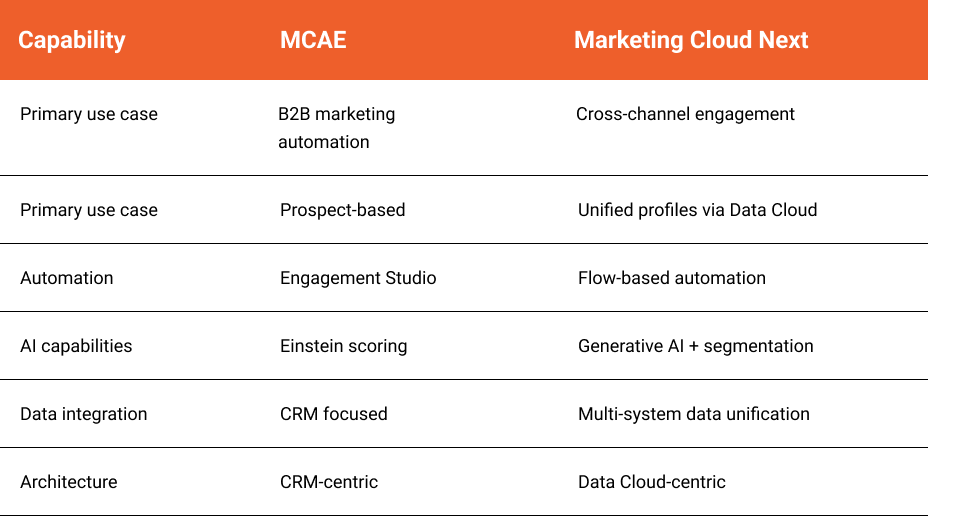
High-Level Comparison
Architecture and Data Model Differences
One of the biggest differences between MCAE and Marketing Cloud Next lies in how the platforms manage data.
Marketing Cloud Account Engagement uses a prospect-based data model, where leads and contacts are managed primarily within Salesforce CRM.
Marketing Cloud Next uses Data Cloud’s unified profile architecture. This enables organizations to combine customer data from multiple systems into a single view.
This unified data model allows marketers to build more advanced segmentation strategies and activate audiences across multiple channels.

Example configuration of sender domains within Marketing Cloud Account Engagement
Source:Salesforce UI
Automation and Campaign Management
Marketing Cloud Account Engagement primarily uses tools such as:
- Automation Rules
- Engagement Studio
- Completion Actions
These tools allow marketing teams to automate campaigns and nurture leads over time.
Marketing Cloud Next introduces a different approach using flow-based automation and event-driven journeys. Marketing teams can trigger campaigns based on real-time customer behaviors and signals coming from Data Cloud.
This allows for more responsive and personalized marketing experiences.
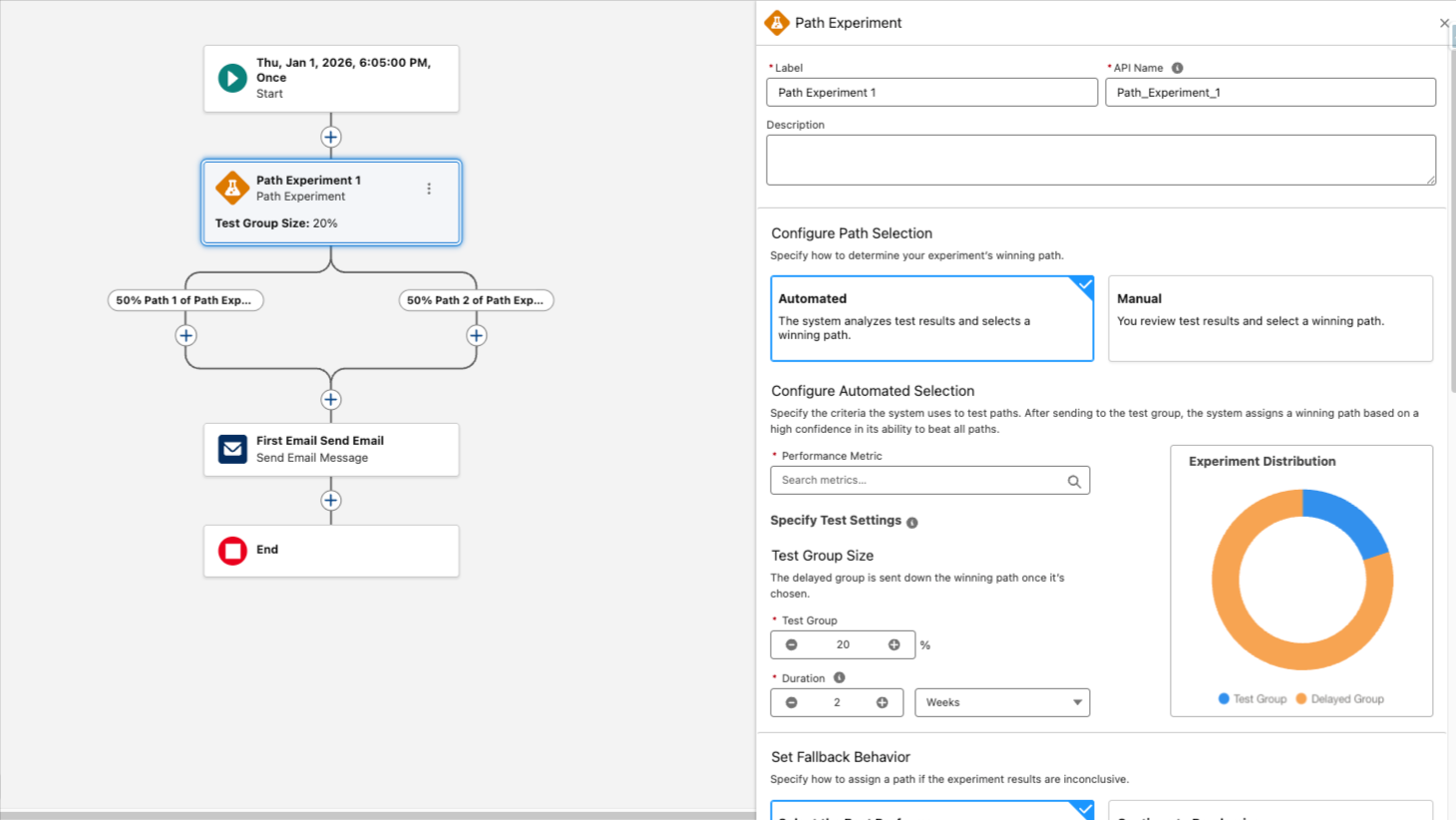
Example of flow-based automation and journey experimentation within Marketing Cloud Next.
Source:Salesforce UI
Tracking and Engagement Data
Engagement tracking and customer behavior data are foundational to how marketing automation platforms measure campaign performance.
In Marketing Cloud Account Engagement, engagement tracking is typically implemented through tracker domains and embedded scripts that monitor prospect activities such as page visits, form submissions, and email interactions.
Marketing Cloud Next expands on this model by leveraging Data Cloud’s unified customer profiles, allowing engagement signals to be connected across multiple data sources.
This broader data model enables organizations to analyze behavior across channels and activate audiences using real-time signals.
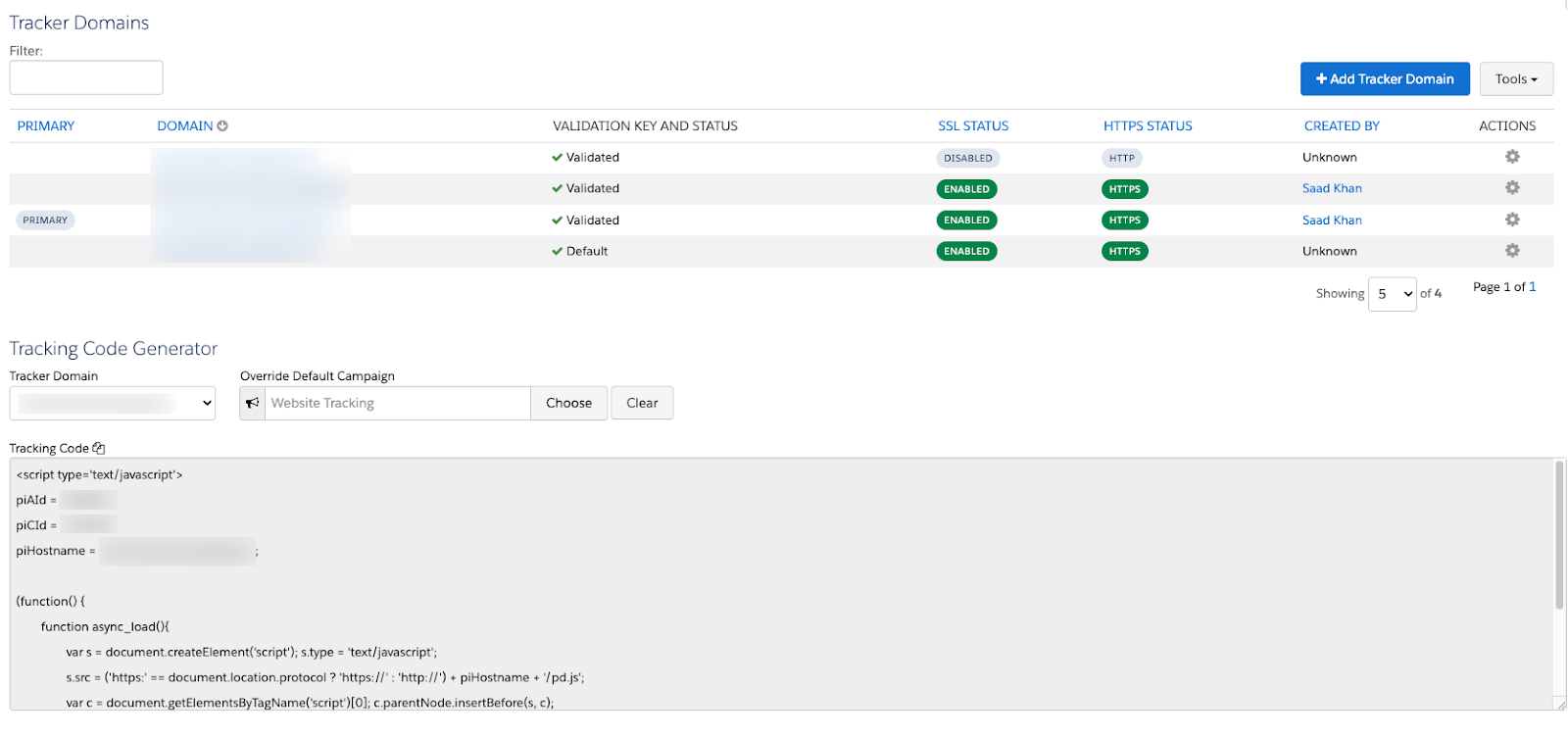
Example of tracker domain configuration used to enable web engagement tracking.
Source:Salesforce UI
AI and Advanced Capabilities
AI is another area where the two platforms differ.
Marketing Cloud Account Engagement includes several AI-powered capabilities such as:
- Einstein Lead Scoring
- Engagement scoring
- Send time optimization
Marketing Cloud Next expands these capabilities through deeper integration with Einstein AI and generative tools, allowing marketers to co-create campaigns, generate content, and build segments using AI assistance.
As Salesforce continues investing in AI, these capabilities are expected to play a larger role in marketing strategy.
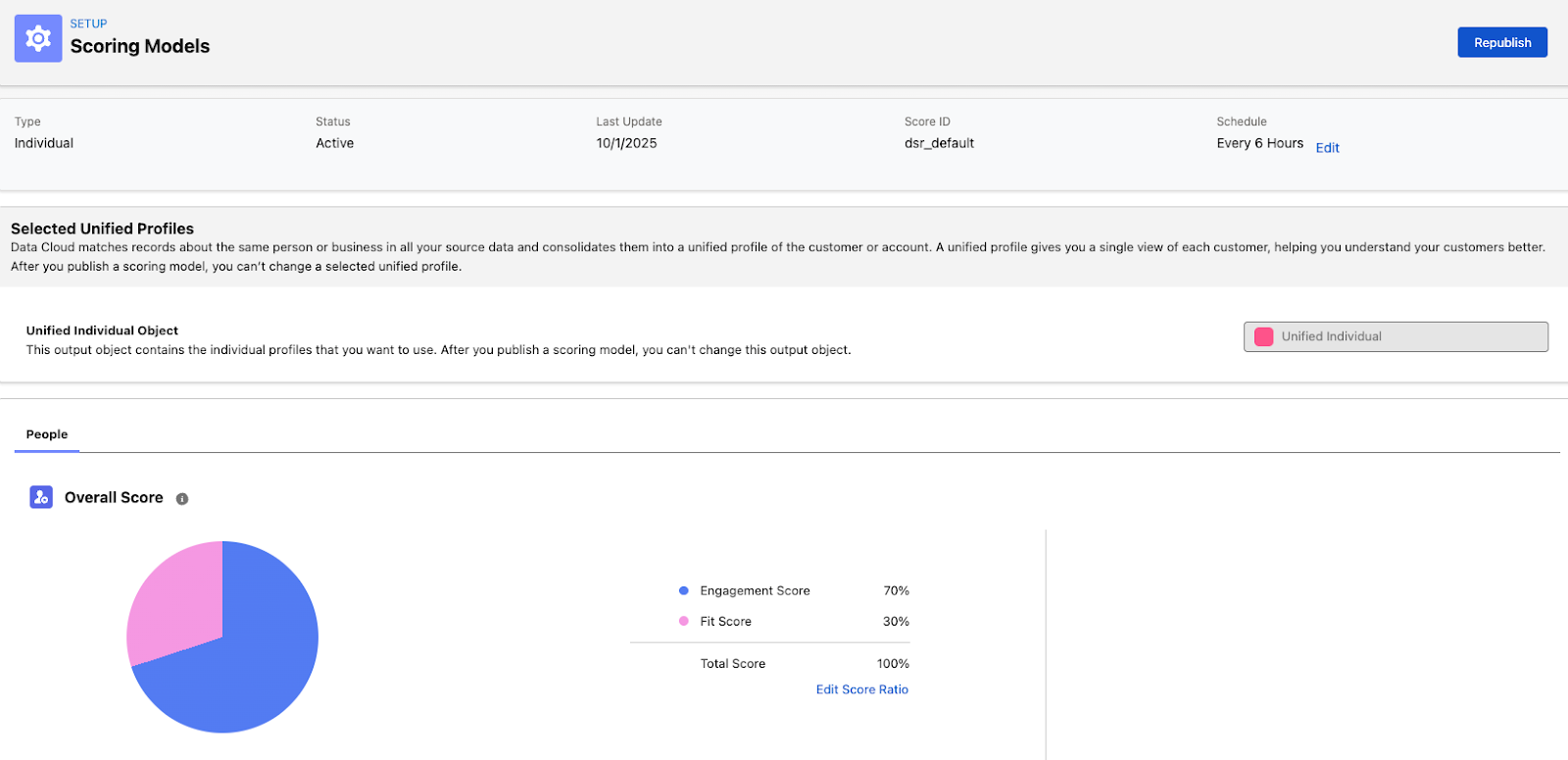
Example of AI-driven engagement scoring and behavioral analysis capabilities.
Source:Salesforce UI
When Should Organizations Consider Marketing Cloud Next?
Organizations may start exploring Marketing Cloud Next when they need:
- deeper integration with Data Cloud
- advanced AI-driven marketing capabilities
- real-time segmentation and personalization
- broader multichannel engagement
For companies that already rely heavily on Data Cloud and unified customer data, Marketing Cloud Next provides a flexible foundation for future marketing initiatives.
Conclusion
Marketing Cloud Account Engagement and Marketing Cloud Next both offer powerful capabilities for marketing teams, but they represent different generations of marketing technology.
MCAE remains a strong B2B marketing automation platform with deep Salesforce integration. Marketing Cloud Next introduces a more modern architecture built on Data Cloud with expanded AI and automation capabilities.
As Salesforce continues to evolve its marketing ecosystem, understanding these differences will help organizations determine which platform best supports their long-term marketing strategy.
Want to explore how these platforms compare in your organization’s environment? Feel free to connect with our team. Our team would be happy to discuss your marketing automation strategy.